
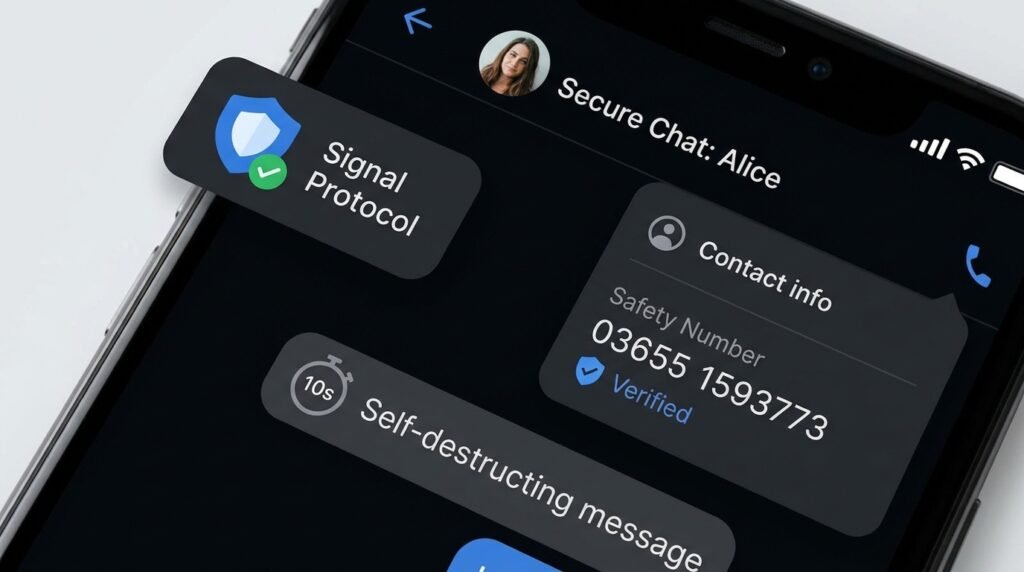
Best Encrypted Messaging Apps for Android Privacy in 2026
The Evolving Landscape of Mobile Privacy in 2026
As modern digital communications face increasing surveillance, commercial data harvesting, and sophisticated network interception threats, relying on standard SMS text messaging or unencrypted chat apps is no longer safe. Traditional mobile carrier communications transmit messages in plaintext across telecom infrastructure, leaving communication logs vulnerable to corporate data brokers, ISP monitoring, and unauthorized data breaches.
True communication privacy relies on two distinct security guarantees: End-to-End Encryption (E2EE)—which ensures that only the sender and intended recipient can decrypt message contents—and Metadata Protection—which prevents eavesdroppers from discovering who you are speaking with, when you are communicating, and your physical location. In this in-depth comparative review, we evaluate the five best privacy-focused encrypted messaging applications available on Android in 2026: Signal, Session, Threema, Wire, and Telegram Secret Chats.
1. Signal Private Messenger: The Uncontested Security Gold Standard
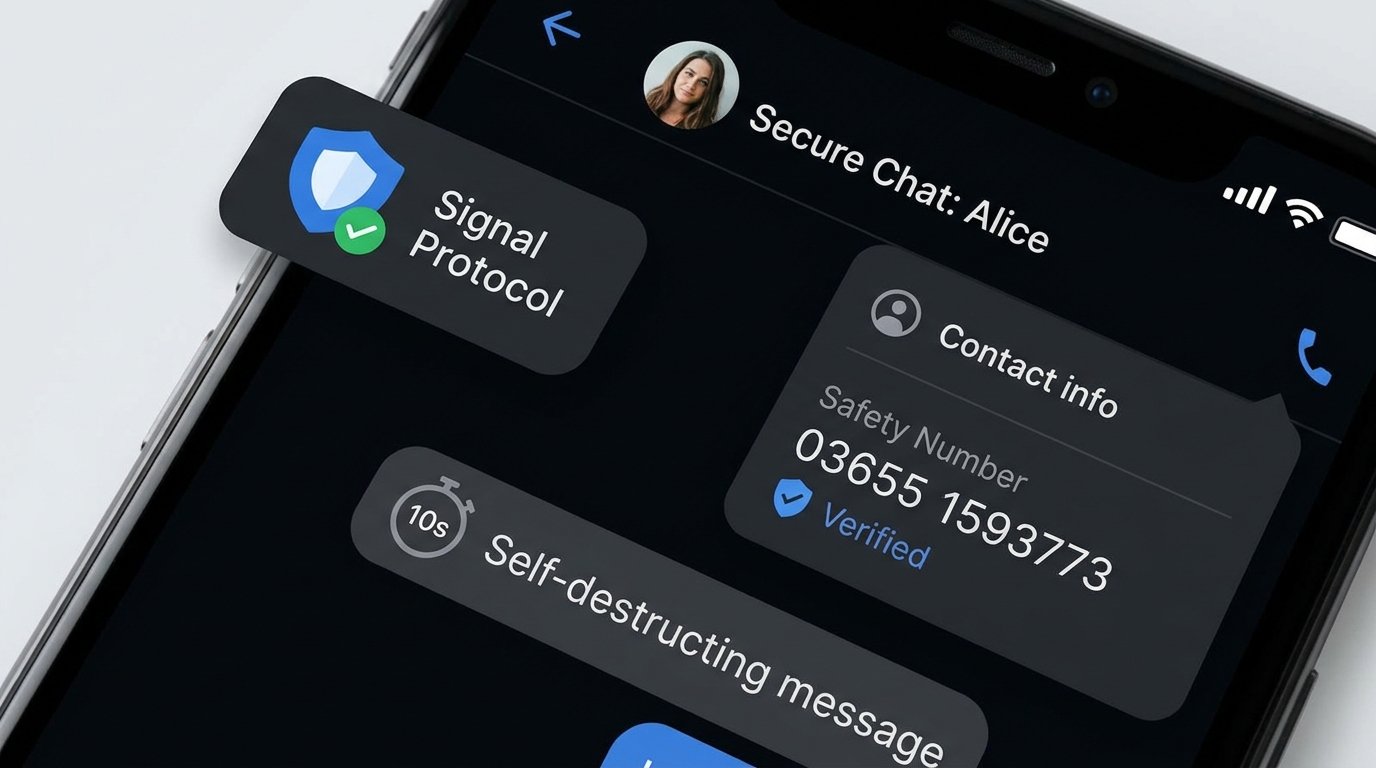
Maintained by the non-profit Signal Foundation, Signal remains the universally acclaimed baseline against which all secure communications software is judged. Open-source, independently audited, and structurally designed around absolute data minimization, Signal utilizes the famous Signal Protocol (combining the Extended Triple Diffie-Hellman [X3DH] key agreement and Double Ratchet algorithm).
Every message, voice call, video chat, file transfer, and group interaction in Signal is encrypted locally before leaving your hardware. Furthermore, Signal invented the groundbreaking Sealed Sender technology. By encrypting the sender’s identity envelope alongside the message payload, Signal’s routing servers deliver messages across the internet without ever recording which phone number sent a message to which recipient.
In 2026, Signal integrated the PQXDH (Post-Quantum Extended Diffie-Hellman) protocol update. This quantum-resistant cryptographic key exchange protects current encrypted conversations against future quantum computing decryption attacks (“harvest now, decrypt later” adversary tactics). Signal also supports Signal Usernames, allowing users to initiate chats without sharing their physical mobile phone numbers with contacts.
Key Privacy Advantages of Signal:
- Minimal Metadata Footprint: In response to legal subpoenas, Signal can only provide two datapoints: the exact timestamp an account was created and the date the account last connected to Signal servers.
- Sealed Sender Infrastructure: Eliminates sender identity metadata during message delivery routing.
- Post-Quantum Encryption (PQXDH): Protects message traffic against future quantum decryption capabilities.
- Open-Source Auditing: 100% open-source client and server codebases, allowing security researchers worldwide to inspect cryptographic implementations continuously.
- Rich Feature Set: Supports encrypted group video calls, self-destructing disappearing messages, screen security blocks, and local backup encryption.
2. Session Messenger: Metadata-Free Decentralized Communication
For users who refuse to link a personal mobile phone number to their communications platform, Session represents a monumental leap forward in metadata privacy. Forked originally from Signal’s code foundation, Session replaces centralized servers with a decentralized onion-routing node network powered by the Oxen Service Node Network (Lokinet).
When you initiate an account on Session, the app generates a unique, anonymous 66-character alphanumeric Session ID key. No phone number, email address, or real-world identifier is ever requested or stored. Messages are wrapped in multiple layers of encryption (similar to Tor onion routing) and routed through three distinct decentralized service nodes, ensuring no single server on the network knows both the sender’s IP address and the receiver’s destination address.
Key Privacy Advantages of Session:
- Zero Personal Identifiers Required: Complete anonymity—no phone number or email address required for registration.
- Decentralized Onion Routing: Message transit paths are obfuscated across decentralized service nodes, concealing your IP address natively.
- No Centralized Metadata Collection: Because there are no central servers hosting user databases, mass surveillance and server subpoena vectors are entirely eliminated.
- Multi-Device Sync via Recovery Passphrase: Link secondary Android devices, tablets, or desktop clients using a master 12-word seed phrase without cloud account links.
3. Threema: Swiss Sovereign Encryption & Complete Anonymous IDs
Developed in Switzerland under strict Swiss federal privacy laws (FADP/FDPO), Threema is a premium, privacy-first messaging app built for individuals and privacy-conscious enterprises. Unlike free platforms funded by donations or venture capital, Threema operates on a one-time purchase model, eliminating financial incentives to collect user data.
Upon installation, Threema generates an entirely randomized 8-digit Threema ID key entirely on your device. Linking your phone number or email address is completely optional. Cryptographic key generation occurs locally using the open-source NaCl encryption library. Threema’s servers act strictly as message relays; as soon as a message is delivered to the recipient’s hardware, it is permanently deleted from Threema’s server memory buffers.
Threema also offers Threema Safe, an encrypted backup solution that backs up your anonymous ID, contact lists, and user settings to an independent server of your choice without exposing cryptographic private keys.
Key Privacy Advantages of Threema:
- Swiss Jurisdictional Protection: Protected by stringent Swiss privacy laws, fully compliant with GDPR regulations.
- Anonymous Threema ID System: Full communication capabilities without providing phone numbers or personal credentials.
- Local Storage Architecture: Contact lists, chat histories, and key stores are stored exclusively on your local device storage, never synced to cloud infrastructure.
- Independent Security Audits: Regularly audited by top European cybersecurity auditing firms (Cure53), with full audit reports published publicly.
4. Wire: Enterprise-Grade Secure Collaboration
Designed primarily for enterprise security teams, businesses, and privacy-conscious professionals, Wire combines strong end-to-end encryption with comprehensive collaborative tools like screen sharing, file storage, and team conferencing. Wire’s cryptographic engine is built on the Proteus Protocol (an independent implementation of the Signal Double Ratchet protocol).
Wire offers unique flexibility: organizations can utilize Wire’s secure cloud infrastructure, deploy it on private cloud servers, or host the entire server environment completely on-premise for absolute data sovereignty. Every conversation, conference call, and shared attachment is encrypted end-to-end by default across all desktop and mobile apps.
Key Privacy Advantages of Wire:
- Comprehensive Collaboration Security: E2EE voice, video, guest rooms, document sharing, and multi-user conference calling.
- On-Premise Deployment Options: Allows corporate security teams to host their own messaging servers locally.
- Multi-Device Independent Keys: Assigns distinct cryptographic key pairs to every device registered under an account, preventing device impersonation attacks.
- Fully Open Source: Client applications and backend server architectures are open for public verification.
5. Telegram Secret Chats: Popularity vs Security Realities
With over 900 million active global users, Telegram is one of the most widely used messaging applications on Android. However, it is essential to understand Telegram’s unique architectural distinction between standard cloud chats and end-to-end encrypted chats.
By default, standard Telegram chats are NOT end-to-end encrypted. Instead, standard chats utilize client-to-server encryption, storing your messaging history, media attachments, and contact databases on Telegram’s centralized cloud servers. To achieve true end-to-end encryption on Telegram, users must manually initiate a Secret Chat.
Understanding Telegram Secret Chats:
- Manual Activation Required: You must explicitly open a contact’s profile, tap the options menu, and select Start Secret Chat.
- Device-Specific Binding: Secret chats cannot be accessed on secondary connected desktop or tablet apps; they reside exclusively on the device where the secret chat was initiated.
- MTProto 2.0 Encryption: Utilizes Telegram’s proprietary MTProto 2.0 cryptographic protocol rather than standard Signal protocol implementations.
- Self-Destruct Timers: Supports configurable self-destruct timers for automatic message deletion across both device screens.
Cryptographic Protocol & Architecture Comparison
Understanding the underlying cryptographic protocols powers informed security choices. Signal Protocol utilizes a combination of Curve25519, AES-256-CBC, and HMAC-SHA256 to guarantee both Forward Secrecy (ensuring past messages remain secure even if future keys are compromised) and Break-in Recovery (restoring security automatically after a temporary key compromise).
Session’s Oxen network adapts these principles into a decentralized framework, replacing central signal servers with decentralized service nodes bonded by blockchain collateral, rendering server-level monitoring structurally impossible.
Encrypted Messaging App Comparison Matrix
The comparative matrix below summarises each platform’s published security specifications, protocol standards, and privacy policies. These values reflect the developers’ public documentation, not independent lab measurements:
| Messaging App | Encryption Protocol | Phone Number Required? | Decentralized Network? | Open Source (Client/Server) | Metadata Retention Policy |
|---|---|---|---|---|---|
| Signal | Signal Protocol (Double Ratchet) | Yes (Reg. only) | No (Centralized) | Yes / Yes | Near-Zero (Creation date & last connect time) |
| Session | Session Protocol (Lokinet Onion) | No (Session ID) | Yes (Service Nodes) | Yes / Yes | Absolute Zero (IPs & identities obfuscated) |
| Threema | NaCl Cryptographic Library | No (Threema ID) | No (Swiss Servers) | Yes / Yes | Zero (Messages deleted instantly upon delivery) |
| Wire | Proteus (Signal derivative) | Email or Phone | No (Cloud/On-Prem) | Yes / Yes | Low (Stores connected device key lists) |
| Telegram | MTProto 2.0 (Secret Chat) | Yes | No (Proprietary Cloud) | Yes (Client) / No (Server) | High (Cloud chats store full message logs) |
How to Select the Right Secure Messenger for Your Threat Model
Selecting the optimal messaging application depends entirely on evaluating your personal security requirements:
- Choose Signal if: You want an easy-to-use, feature-rich replacement for daily texting with friends and family that delivers the strongest audited end-to-end encryption in existence.
- Choose Session if: You demand absolute personal anonymity, refuse to share your real phone number, and want native protection against IP address tracking.
- Choose Threema if: You prefer Swiss legal privacy protections, want zero-knowledge anonymous accounts, and support fully open-source commercial software.
- Choose Wire if: You need enterprise team collaboration, encrypted video conferencing, and on-premise server control.
- Choose Telegram Secret Chats if: You already use Telegram for public channels but require temporary end-to-end encrypted 1-on-1 private sessions.
Frequently Asked Questions (FAQ)
Is WhatsApp as secure as Signal since it uses the Signal Protocol?
While WhatsApp uses Signal’s core cryptographic protocol for message text encryption, WhatsApp collects extensive account metadata—including your contact list, interaction frequencies, device identifiers, location data, and cloud backup unencrypted keys (unless explicit password-encrypted backups are enabled). Signal and Session remain vastly superior for metadata protection.
Why is open-source software critical for security applications?
Closed-source proprietary applications force users to blindly trust developer claims. Open-source code allows global security researchers, cryptographers, and independent security firms to inspect source code continuously, ensuring no hidden backdoors, intentional vulnerabilities, or secret surveillance tracking hooks exist.
Can encrypted messages be backed up safely on Google Drive?
Unencrypted Google Drive backups expose your plaintext chat history to cloud access. If you back up chats, choose apps like Signal or Threema that use local 30-digit passphrase-encrypted backup files stored locally on external flash drives or encrypted cloud storage vaults.
Conclusion
Securing your mobile communications against modern surveillance requires choosing tools designed ground-up for data minimization. For the vast majority of Android users, Signal offers the perfect balance between seamless usability and unbreakable encryption. However, for those seeking absolute metadata isolation and total anonymity, Session and Threema provide unmatched protection. Upgrading your messaging software today is the single most effective action you can take to safeguard your digital privacy in 2026.
Reviewed by the APKMales editorial team. This guide was compiled from publicly available documentation, including each app’s published security documentation and independent audit reports.
